New York City home sales in the 2050 flood zones, and what buyers are told
My roleLed it: the data, the map, the report design and the policy recommendations
WhenFall 2023 to March 2024, then press through fall 2024
WithRebuild by Design
ScaleEvery recorded 2023 sale of a one to three family home in the city, checked against two 2050 flood maps
NowReport and map live; front page of The New York Times, September 2024
01
The question
How many New York City homes are being bought and sold in places expected to flood by 2050, and are buyers being told? Under New York State’s disclosure law, flood risk comes up at the point of sale.
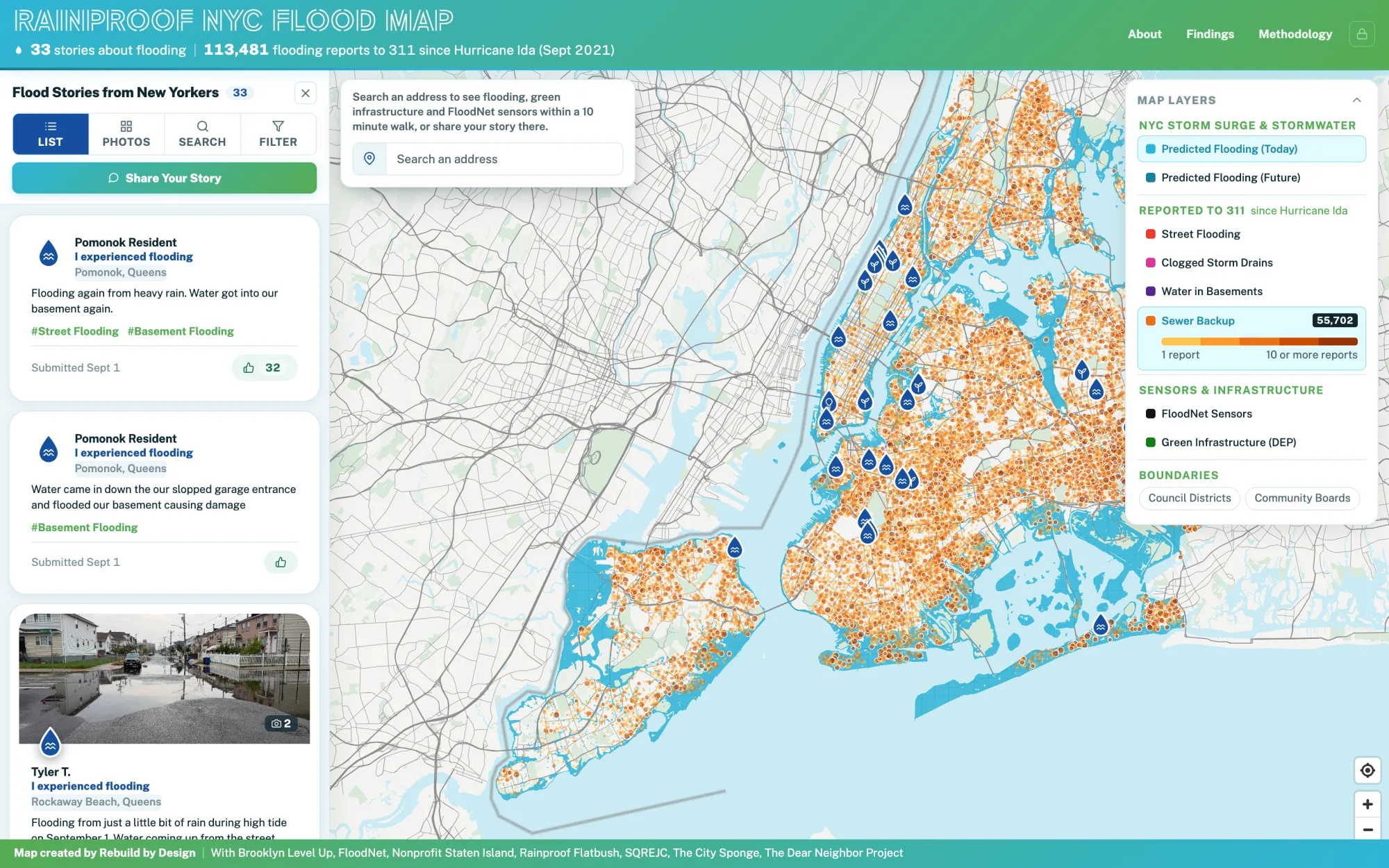
On one block in Kissena Park, Queens, where people died in the flooding from Hurricane Ida, four homes were listed for sale in 2024 at an average of $1.2 million. None of the listings mentioned flood risk.
I kept the broken version, labeled, instead of deleting it. If anyone asks how I got to 100 feet, the earlier versions are still in the folder.
02
The hard part
I started with Zillow listings, and they could not give me numbers I could stand behind. Zillow only returns so many homes per search, so I had to pull Queens in three price bands and stitch them back together. And a listing only shows an asking price. It cannot tell you what anyone actually paid.
Then I had to decide what “near a flood zone” means. The city has two separate 2050 flood maps, one for storm surge from the ocean and one for heavy rain, and they cover different ground. Where I drew the line around them decided the headline number, so it had to be a line I could explain to a lawmaker or a reporter.
What brokeMy third version measured the two flood maps at different distances, 100 feet and 50. I reran it with one 100 foot rule for both and wrote that method out on the report page.
03
How I ran it
I tested the method in numbered versions, and kept each one, before any of it went into a report.
- Fall 2023Listings, then sales recordsPulled Zillow listings borough by borough, then switched to the Department of Finance’s record of every sale in the city.
- December 2023 to February 2024Test the methodTried a 900 foot distance first, then a version that used a different distance for each flood map, then one 100 foot rule for both. Finished the citywide workbook in February.
- February to March 2024Report and mapDesigned the report in InDesign over several drafts, built the interactive map, and made a close-up of the Kissena Park block. Published on Rebuild by Design’s site on 12 March 2024.
- April to September 2024New cuts for the pressPackaged the final data for The New York Times in April. In July, ran the same method for Southeast Queens, zip code by zip code. In September, pulled city sales records back to 2014 for The Times.
- October to November 2024Keep it in front of peopleMade a one page version of the report and a nine post social media series.
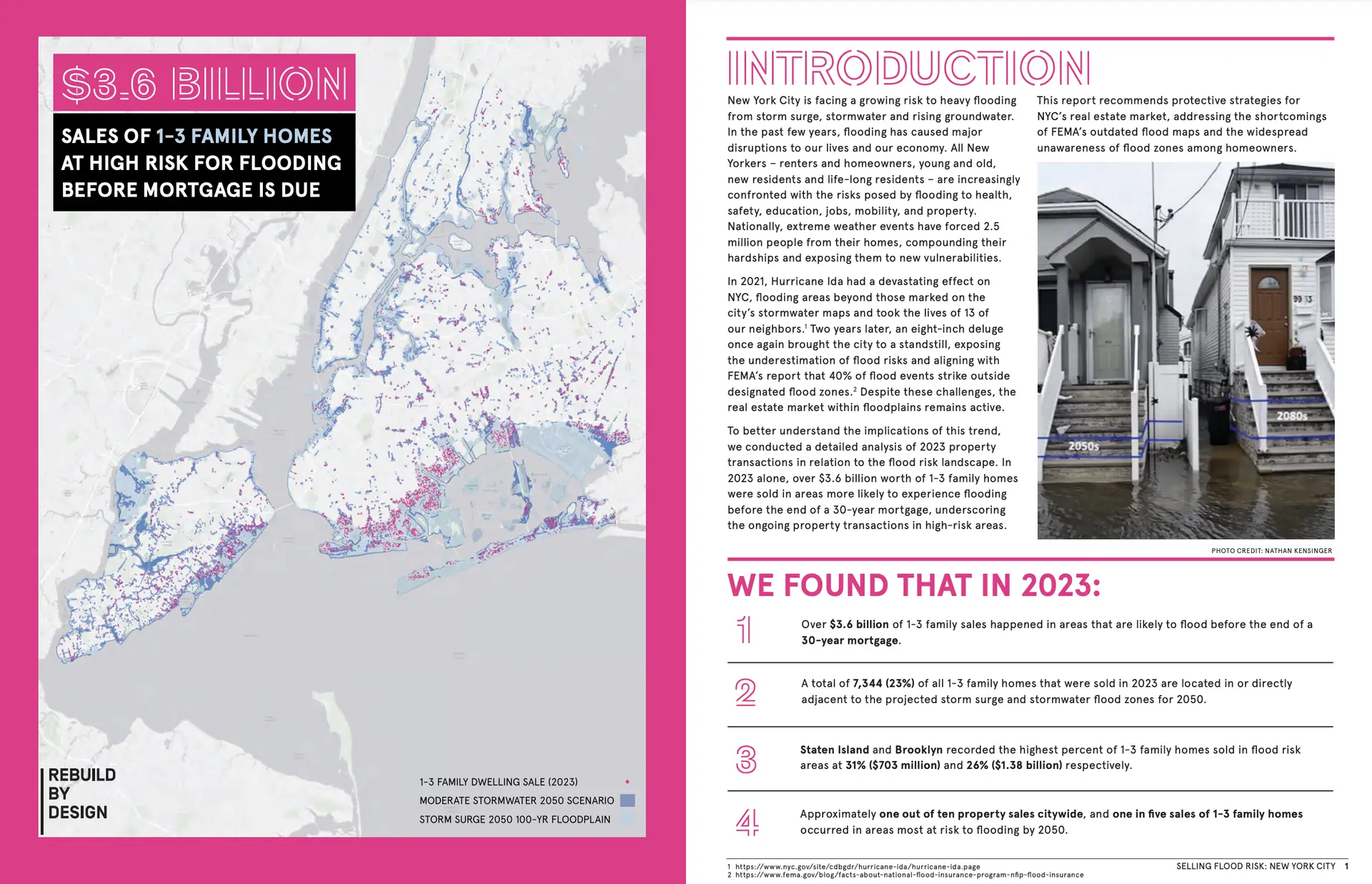
I used recorded sales instead of listings, because the Department of Finance records every sale in the city with its price.
04
What I built
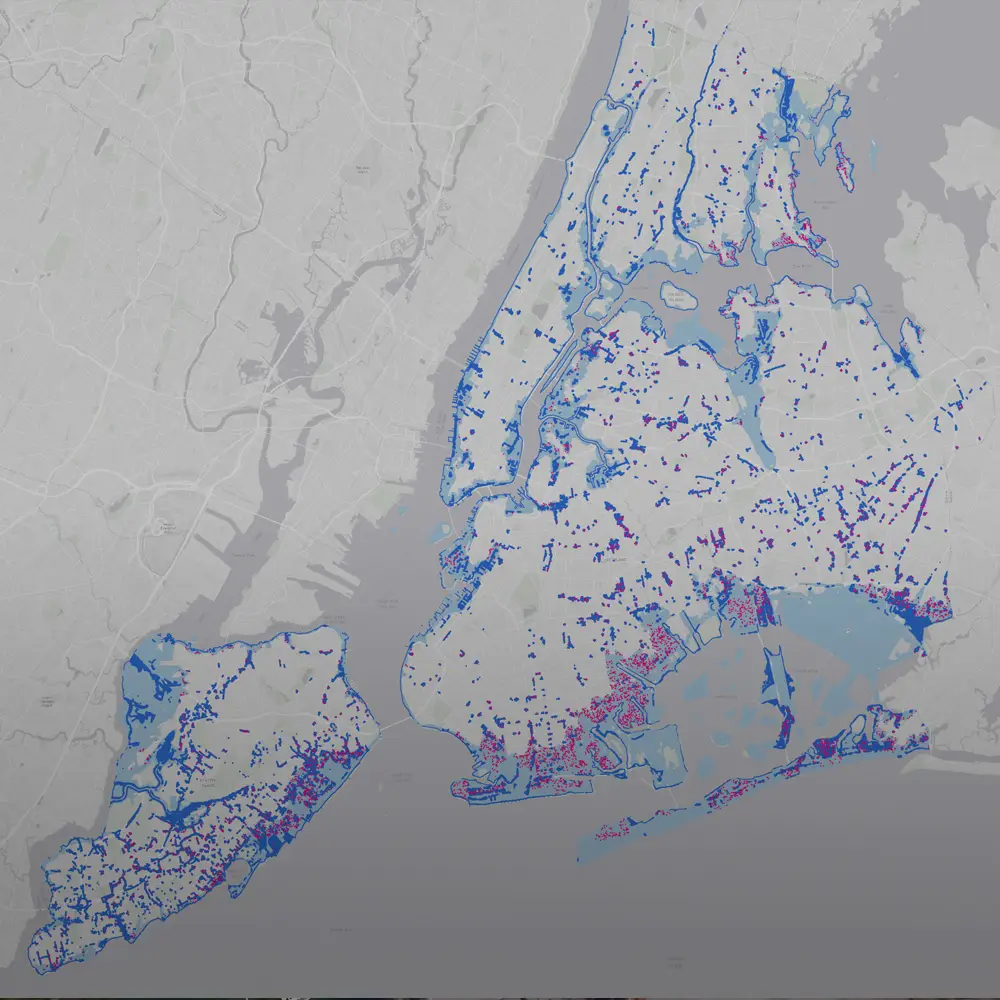
A short report and an interactive map of every one to three family home sold in New York City in 2023 in or within 100 feet of the city’s 2050 flood maps. The map lets anyone zoom in to their own neighborhood. The report puts the numbers by borough next to seven recommendations, starting with telling buyers about future flood risk and flooding history in the listing itself, instead of at the point of sale.
View the report and map →
Read it on Rebuild by Design →
Open the map →
QGIS · Python/R · Data Wrangling · Spatial Analysis · Leaflet · Policy Research · Report Writing · Adobe InDesign · Data Visualization · Project Management
I measured against the 2050 flood maps for storm surge and heavy rain, because a 30 year mortgage signed in 2023 runs well past 2050.
Each sale is recorded as a single point, not the shape of the house, so I used a 100 foot buffer to catch the whole footprint.
05
What it found
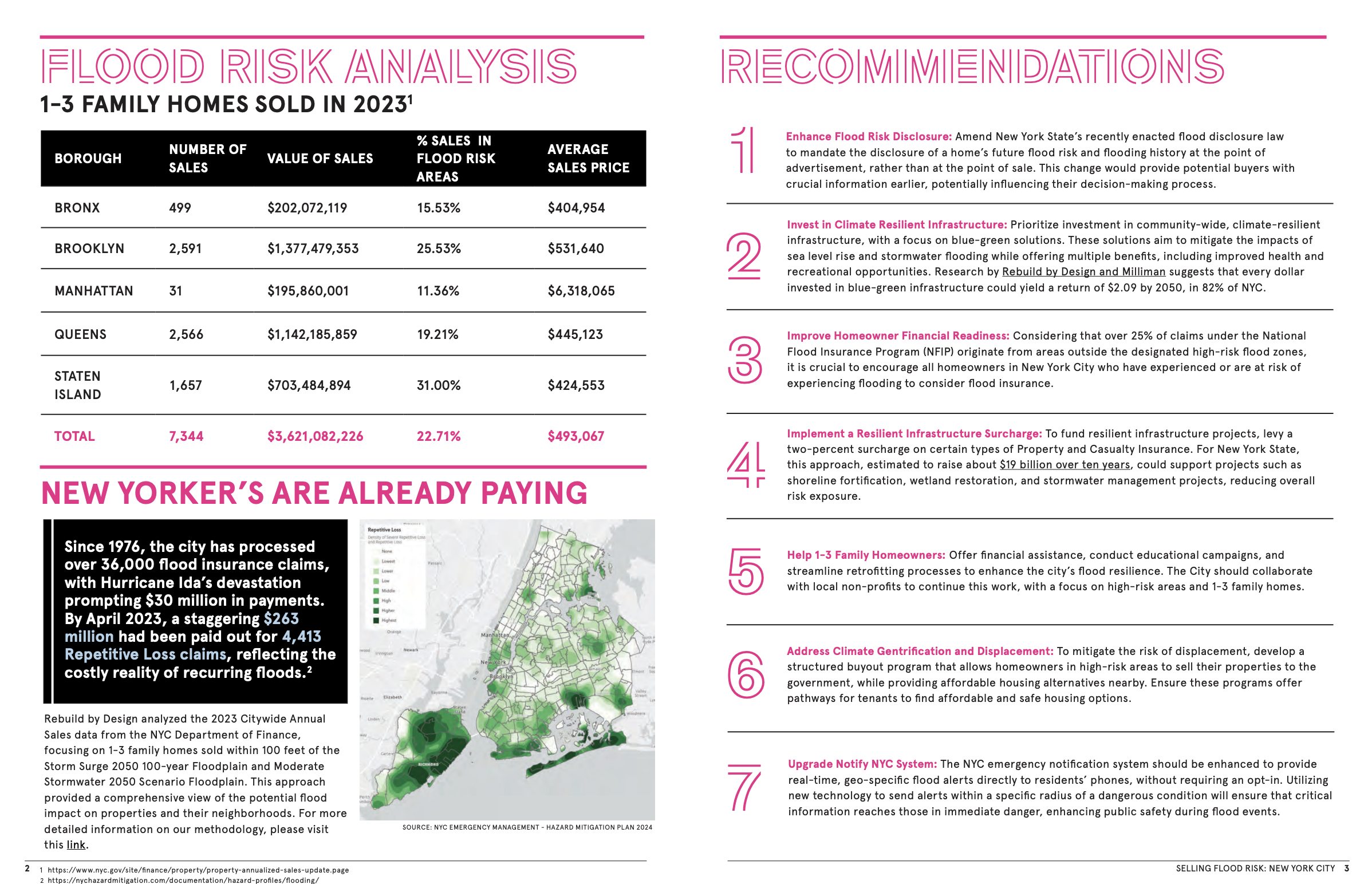
- $3.6 billion in sales of one to three family homes in 2023 was in or within 100 feet of projected 2050 flood zones, nearly one in five citywide.
- That is 7,344 homes sold in or right next to the storm surge and stormwater flood zones for 2050.
- Staten Island had the highest share, 31% ($703 million), then Brooklyn at 26% ($1.38 billion).
- About one in ten property sales of any kind citywide happened in the areas most at risk of flooding by 2050.
06
Where it went next
- 12 March 2024: published with the interactive map on Rebuild by Design’s site.
- Used by New York State legislators working to strengthen flood disclosure requirements for home sales.
- 22 August 2024: New York Amsterdam News, Double-Whammy: How Heavy Rains and High Tides Hurt NYC’s Black and Brown Neighborhoods.
- 14 September 2024: front page of The New York Times, Home Sales in Flood Zones Are Booming. Here’s Why Buyers Take the Risk.