At 11:59 pm on 30 September 2026, the National Flood Insurance Program is set to expire. If Congress does not act, FEMA stops selling and renewing flood policies. The National Association of Realtors estimates a lapse could affect about 1,300 home sales a day.
Deadlines like this one come up often. The program’s last full five year authorization ended in 2017. Since then it has lived on a string of short extensions, stapled onto other bills, again and again.
Why are we stuck? Since 2017 the program has lived deadline to deadline, so nobody plans past the next one.
The deadline gets the headlines. I want to talk about the idea underneath it.
The theory: let the price do the work
For years, the thinking went something like this. If insurance reflects the true cost of living in a risky place, people will see the price and choose to live somewhere safer. The idea was that the market would steer people away from risk.
That is the logic behind FEMA’s newer pricing system, Risk Rating 2.0. Premiums move step by step toward what the risk really costs, with increases for most primary homes capped at 18 percent a year until they get there.
It is a tidy idea, and it leaves out how people actually decide where to live.
What actually happens
People rarely move because of an insurance bill. Their jobs, family, church, kids’ schools and entire lives are there. What they do instead is drop the coverage.
Flood insurance is only required if you have a federally backed mortgage and live inside the official flood zone. Pay off your mortgage and nobody makes you keep it. Live just outside the line (where, remember, a huge share of flood damage happens) and nobody made you buy it to begin with.
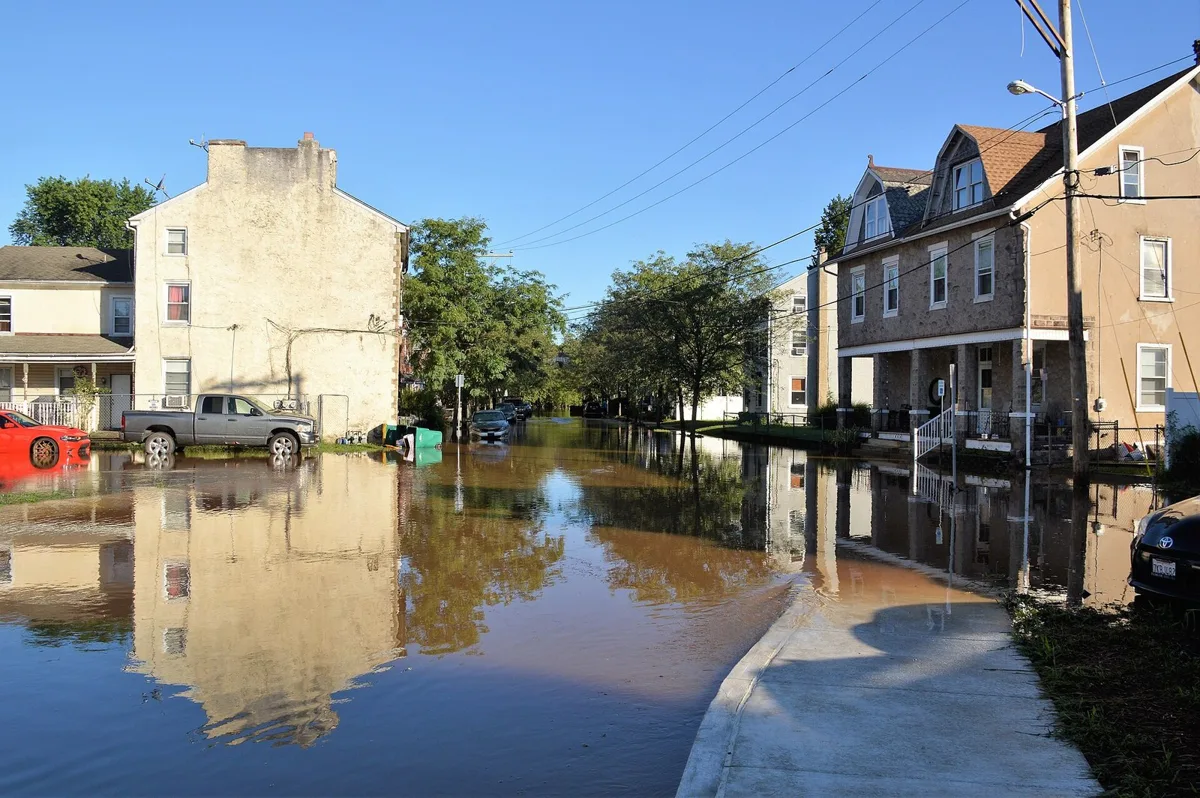

People who pay off their mortgage may not even want flood insurance.
So when the price goes up, people often drop their insurance instead of moving. The risk stays exactly where it was, and nobody is counting it anymore.
Bluelining
There is an older pattern hiding in here. In the last century, lenders drew red lines around neighborhoods they would not invest in, mostly Black and immigrant ones. Some people now call today’s version bluelining: private insurers pulling back from places they see as too risky, which are often the same places that were starved of investment the first time.
When a neighborhood can’t get affordable insurance, it gets harder to get a mortgage. When it is harder to get a mortgage, values fall and the people with options leave. The ones without options stay, with less protection than anyone.
Less protection with low income!!!
What insurance can and can’t do
Insurance is very good at one thing: telling you how sick the patient is. It is a thermometer. What it cannot do is decide where we build, how we drain our streets, whether we protect the wetlands that soak up the rain, or where people can go when a place really does become too dangerous.
Those are land use decisions. They belong to planning, zoning, building codes and public investment. When we ask a premium to do that work, prices go up and coverage shrinks, while the risk stays put.
The proactive move: pair every price increase with a plan for the land. Insurance measures the risk, planning decides what we do about it.
Whatever happens on 30 September, the harder question will still be sitting there after the vote. It is whether we are willing to plan for the risk.